Preventing Environmental Failures: Specifying Dual-Containment Chemical Storage Tanks
Introduction
Storing bulk quantities of hazardous chemicals like sodium hypochlorite, caustic soda, or nitric acid requires a robust risk mitigation strategy. If a single-wall storage tank develops a hairline fracture or structural stress crack, thousands of gallons of toxic chemicals can spill into the local environment, risking severe regulatory fines and personnel injuries.
To eliminate this vulnerability without constructing expensive concrete containment dikes around every unit, environmental compliance teams use Dual-Containment Chemical Storage Tanks.
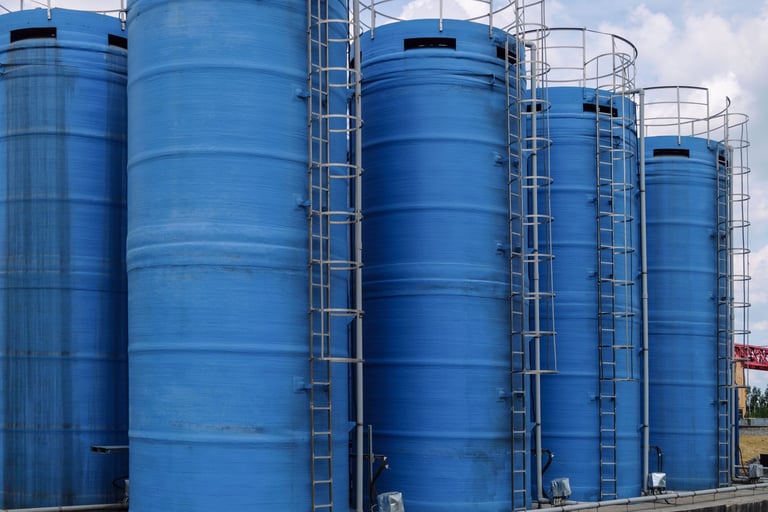
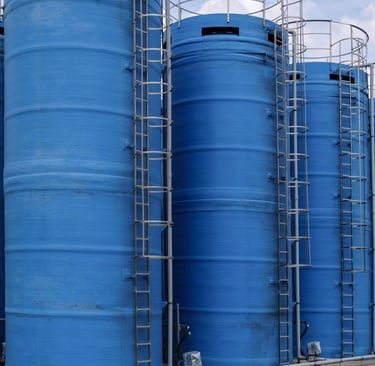
Industrial High-Density Polyethylene (HDPE) Bulk Chemical Storage Tanks
The Tank-in-a-Tank Design Concept
A dual-containment system operates on a simple but highly effective principle: it nests an inner storage tank completely inside a rugged outer containment shell.
110% Capacity Protection: The outer tank is engineered to hold at least 110% of the inner tank's total volume. In the rare event that the primary inner tank wall fails, the secondary outer shell safely captures the entire chemical payload.
Interstitial Monitoring: The air gap between the two tank walls—known as the interstitial space—is often equipped with automated electronic leak detection sensors. If any fluid enters this space, an alarm is triggered instantly, allowing operators to transfer the chemical safely before a catastrophic leak occurs.
Material Selection: Choosing High-Density Polyethylene (HDPE)
For highly corrosive inorganic acids, High-Density Cross-Linked Polyethylene (XLPE) or High-Density Polyethylene (HDPE) is often superior to stainless steel. These specialized plastics are completely immune to chemical rusting and environmental stress cracking, providing a reliable, low-maintenance lifespan for decades.
Secondary Containment, Primary Peace of Mind Pipemav supplies industrial-grade HDPE and XLPE dual-containment storage tank systems engineered to meet international environmental protection standards.