Heavy-Wall Piping: Specifying Schedule 160 and XXS Seamless Steel Pipes for High-Pressure Chemical Synthesis
Introduction
In high-pressure industrial processes—such as ammonia synthesis, hydrocracking, and LDPE (Low-Density Polyethylene) production—working pressures can easily exceed 300 bar (4,350 psi) at temperatures above 400°C. Standard carbon steel pipes like Schedule 40 or 80 will instantly fail under these conditions.
To contain these extreme energies safely, engineers must specify heavy-wall seamless steel piping, specifically Schedule 160 and Double Extra Strong (XXS). Understanding how wall thickness, manufacturing tolerances, and mechanical strength interact is essential for procurement managers and piping designers rebuilding critical high-pressure loops.
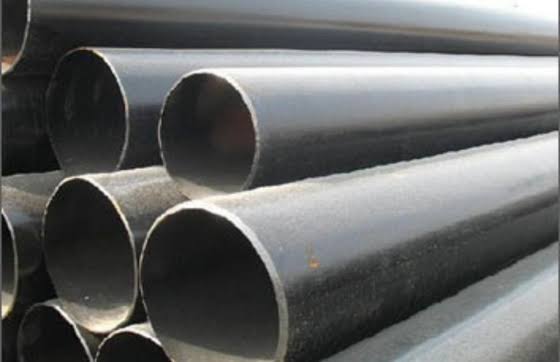
Heavy-Wall Seamless Steel Pipes.
Decoding Pipe Schedules: Sch 160 vs. XXS
While both Schedule 160 and XXS designate heavy-wall piping, they are not always identical:
Schedule 160: A standard ASME B36.10M dimension rating. The wall thickness varies depending on the nominal pipe size (NPS). For example, a 2-inch NPS Schedule 160 pipe has a wall thickness of 8.74 mm (0.344 inches).
Double Extra Strong (XXS): Originally part of the older iron pipe size (IPS) standards. For smaller pipe sizes (typically below 8 inches NPS), XXS is often significantly thicker than Schedule 160. For a 2-inch NPS pipe, the XXS wall thickness is a massive 11.07 mm (0.436 inches).
Because the outer diameter (OD) of the pipe is kept constant to fit standard flanges and fittings, increasing the wall thickness directly decreases the inner diameter (ID). This reduces the flow cross-section, which must be factored into your pumping velocity and pressure-drop calculations.
The Critical Role of Seamless Manufacturing
In high-pressure loops, welded pipe is strictly banned. Under extreme cyclic loading, any welded seam introduces a microstructural "heat-affected zone" (HAZ) that serves as a prime site for crack initiation and chemical corrosion.
Seamless pipes (manufactured via rotary piercing of solid steel billets) ensure a highly uniform grain structure throughout the pipe wall. When sourcing these critical assets:
Specify ASTM A106 Grade B or C for high-temperature carbon steel service.
Specify ASTM A335 (Grade P11, P22, or P91) alloy steels if the system operates in the creep range (above 400°C), where chrome-moly alloys prevent long-term metal degradation.
Audit the Mill Test Reports (MTRs): Ensure all heavy-wall shipments include 100% hydrostatic testing, positive material identification (PMI), and ultrasonic examination to rule out internal voids or lamination defects in the thick pipe walls.
Heavy-Wall Piping for Uncompromising Demands Pipemav maintains a robust supply network of fully certified Schedule 160 and XXS seamless steel pipes, high-pressure forged fittings (ASTM A105/A182), and companion flanges.