Defeating Vacuum Collapse: Engineering Resilient PTFE Lined Steel Piping for Severe Duty
Introduction
Fluoropolymer-lined steel piping systems (PTFE or PFA lined) are the undisputed standard for transporting highly concentrated corrosive acids. They offer the complete corrosion barrier of plastics paired with the rigid, high-pressure mechanical backing of carbon steel.
However, many process plants experience a baffling operational failure: a pipe line running under high temperatures suddenly suffocates, starving downstream processes. When maintenance teams split the flanges, they find that the internal plastic liner has completely collapsed or imploded inward, acting like a closed valve. Understanding how vacuum forces destroy plastic linings is critical to designing a bulletproof pipe system.
The Mechanism of Vacuum Collapse
Many aggressive chemical loops alternate between high pressures and deep vacuum cycles—such as when a batch reactor drains rapidly, or during steam cleaning cycles. When a vacuum forms inside the line while the system is hot (120℃), the plastic lining softens significantly.
Because the air pressure trapped between the external steel shell and the internal plastic liner is higher than the internal vacuum pressure, it pushes the liner away from the steel wall, collapsing it inward.
How to Design Against Lining Collapse
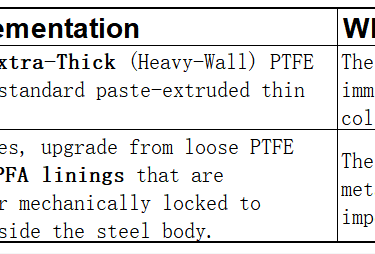
To build a lined piping network that can withstand a full vacuum (100℃ negative pressure) at high operating temperatures, engineers must implement three strict procurement metrics: