Managing Thermal Expansion: The Advantages of Floating Head Shell and Tube Heat Exchangers
Introduction
When process streams inside a chemical plant exhibit extreme temperature differentials—such as cooling a hot oil fraction at 250℃ using cooling water at 30℃—the physical metal components of a heat exchanger expand at wildly different rates. In a standard fixed tubesheet heat exchanger, this differential thermal expansion places immense mechanical stress on the tube-to-tubesheet welds, frequently leading to structural failure and internal cross-contamination.
To absorb this movement safely while handling severe thermal cycling, process engineers turn to Floating Head Shell and Tube Heat Exchangers.
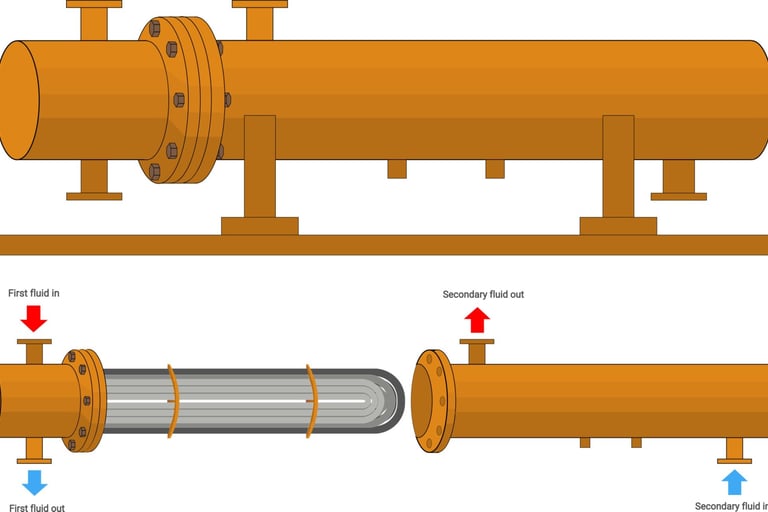
Floating Head Shell and Tube Heat Exchanger Configuration
How the Floating Head Absorbs Stress
In a floating head design (most commonly classified under TEMA standards as AES or BES types), one tubesheet is firmly bolted to the outer shell of the exchanger, while the opposite tubesheet is left completely unattached.
Because this second tubesheet "floats" freely inside the shell cover, the entire internal tube bundle can expand or contract longitudinally without pushing against the rigid outer shell structure. This completely eliminates the need for external expansion bellows, which are notorious weak points in high-pressure processes.
Maintenance Benefits: Total Internal Inspection
Beyond thermal stress relief, floating head exchangers offer a massive maintenance advantage: the entire internal tube bundle can be pulled completely out of the shell casing.

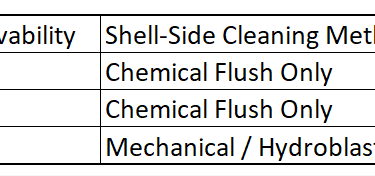
For fine chemical plants handling heavy fluids that foul or deposit scale on the outer walls of the tubes, the ability to mechanically hydroblast the shell-side interior ensures maximum thermal efficiency over decades of operation.
High-Performance Industrial Heat Transfer Pipemav fabricates TEMA-compliant shell and tube heat exchangers with custom metallurgies optimized for high-pressure chemical systems.