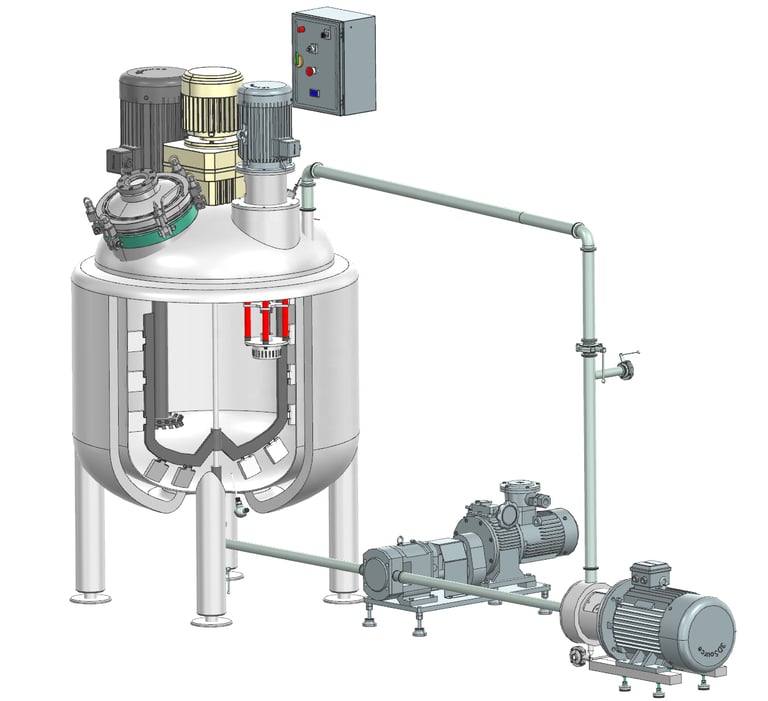
Demystifying Pump Reliability: Single-Spring vs. Multi-Spring Mechanical Seals
Introduction
In a chemical process plant, centrifugal pumps are the workhorses of fluid movement. However, pump downtime is rarely caused by a failure of the impeller or the motor itself—it almost always stems from the mechanical seal. When handling corrosive, high-temperature, or volatile media, choosing the correct configuration to maintain face pressure is the difference between months of uninterrupted uptime and sudden environmental leaks.
While single-spring seals have long been an industry standard for heavy slurries, multi-spring mechanical seals have rapidly become the preferred choice for high-speed, precision chemical refining assets.
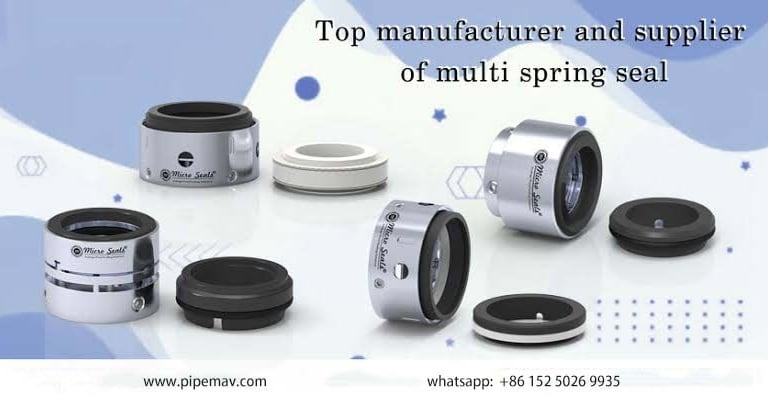
Industrial Multi-Spring Mechanical Seal Components
The Engineering Difference: Load Distribution
The fundamental difference between these two configurations lies in how they apply closing force to the seal faces:
Single-Spring Seals: These use a large, single helical coil spring wrapped around the shaft. Because the spring wire is thick, it resists clogging when processing thick fluids or media with high suspended solids. However, a single spring cannot distribute force completely evenly around the circumference of the seal face, and it is highly sensitive to angular shaft misalignment.
Multi-Spring Seals: These utilize a series of small, evenly spaced springs arranged around the periphery of the seal body. This multi-point design provides an exceptionally uniform load across the entire 360-degree surface of the seal face.
Why Face Uniformity Protects Chemical Assets
Because multi-spring designs deliver uniform face pressure, they minimize uneven wear tracking on premium face materials like silicon carbide or carbon-graphite. Furthermore, the smaller springs adapt instantly to shaft deflection and micro-vibrations at high rotational speeds (above 3,000 RPM).
The main trade-off? The small clearances inside multi-spring pockets make them susceptible to fouling if the chemical media tends to crystallize or polymerize upon temperature drops. In those scenarios, utilizing a clean external flush plan (such as an API Plan 11 or 32) is crucial.
Engineered for Leak-Free Rotating Performance Pipemav supplies API 682 compliant single and multi-spring mechanical seals designed to withstand volatile hydrocarbons and aggressive chemical media.