Preventing Fugitive Emissions: A Guide to Specifying API 682 Mechanical Seals for Process Pumps
Introduction
In a chemical plant or oil refinery, pumps are the primary source of volatile organic compound (VOC) leaks. When a centrifugal pump handles hazardous, flammable, or toxic fluids like benzene, crude oil, or liquified petroleum gas (LPG), standard packing or cheap utility seals won't cut it. A single seal failure can trigger an unscheduled shutdown or, worse, a catastrophic fire.
To ensure absolute containment and satisfy strict environmental regulations, engineering teams must specify API 682 Mechanical Seals. This standard provides a rigorous framework for seal design and support systems to guarantee continuous, leak-free operation for at least 25,000 hours.
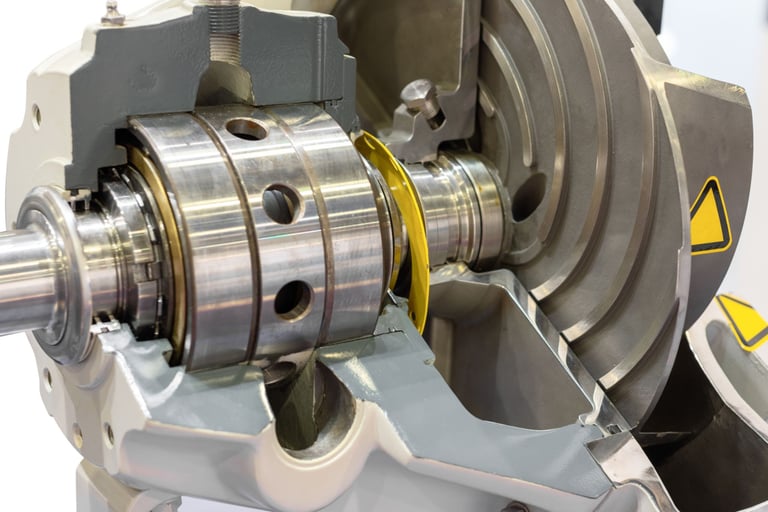
Heavy-Duty Centrifugal Pump Mechanical Seal Chamber
The Three Category Framework of API 682
When sourcing an API 682 cartridge seal, you must select the correct category based on your operating temperatures, pressures, and fluid properties:
Category 1: Designed for standard utility services, non-hazardous fluids, and low-pressure applications. They use inexpensive materials and operate up to 22 bar (315 psi) and temperatures from -40°C to 260°C.
Category 2: Built for core refinery process streams. These seals feature a heavier-duty construction, tighter manufacturing tolerances, and are rated for pressures up to 42 bar (615 psi).
Category 3: The premium tier engineered for severe, high-risk, toxic, or ultra-high-pressure environments. They undergo the most stringent testing and are standard choices for hot heavy crude oil pumps, light hydrocarbons, and toxic chemical dosing.
Piping Plans: The Secret to Seal Longevity
A mechanical seal cannot survive alone; it requires a dedicated environment control system known as an API Piping Plan. These plans circulate fluid through the seal chamber to cool the faces, flush away particulates, or provide a barrier fluid:
API Plan 11: Flushes fluid from the pump discharge back across the seal faces. Ideal for clean fluids to prevent overheating.
API Plan 53A (Dual Pressurized Seal): Uses an external reservoir to supply a clean barrier fluid between two nested seals at a pressure higher than the pump stuffing box. If the inner seal fails, clean barrier fluid leaks into the process rather than toxic chemicals leaking into the atmosphere.
Zero Leaks. Total Compliance. Pipemav supplies fully engineered API 682 cartridge mechanical seals and automated flush panels designed for severe hydrocarbon duties.