Handling Aggressive Media: Why Glass-Lined Reactors Excel in Fine Chemical Synthesis
Introduction
When synthesizing fine chemicals or pharmaceutical intermediates, process engineers routinely mix highly aggressive acids (like hydrochloric or sulfuric acid) at elevated temperatures. Under these conditions, standard carbon steel corrodes within days, and even premium stainless steel alloys can suffer from severe pitting.
To solve this problem without moving to ultra-expensive exotic metals like tantalum or zirconium, the fine chemical industry relies heavily on Glass-Lined Steel Reactors. By fusing a specialized borosilicate glass lining to a high-strength carbon steel shell, you get the structural integrity of steel combined with the near-total chemical inertness of glass.
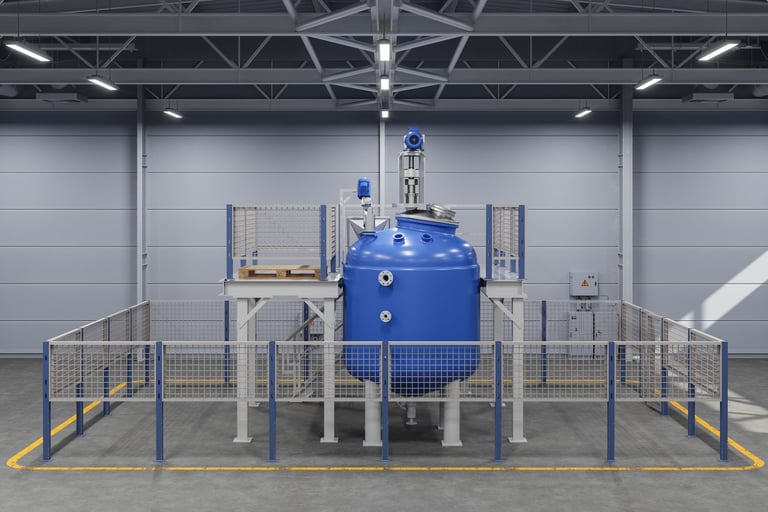
Heavy-Duty Glass-Lined Chemical Synthesis Reactor Vessel
The Material Science Behind the Bond
The manufacturing of a glass-lined reactor is a precision thermal process. Multiple layers of glass powder are sprayed onto the inner sandblasted surface of the steel vessel, which is then fired in a massive furnace at temperatures exceeding 800℃.
During this firing process, a chemical bond forms at the interface between the glass and the steel. This ensures that the glass layer doesn't simply sit on top of the metal like paint—it becomes structurally locked to the steel substrate.
Critical Operating Rules: Thermal and Mechanical Shock
Despite its exceptional chemical resistance, glass-lined equipment has two major failure modes that operators must actively prevent:
Thermal Shock: Glass expands and contracts at a different rate than steel. If you pump a cold fluid (20℃) into a hot reactor vessel (150℃), the rapid temperature differential will crack the glass lining, exposing the vulnerable steel shell underneath.
Mechanical Shock: Dropping a wrench or an internal component during maintenance can chip the glass coating. Plant managers should implement regular spark-testing (using high-voltage probes) to detect microscopic pinholes in the glass lining before putting a vessel back into corrosive service.
Engineered for Absolute Corrosive Isolation
Pipemav supplies premium-tier glass-lined reactors, agitators, and process piping systems engineered to withstand severe chemical environments.