Optimizing Gas Absorption: The Engineering Principles of Packed Tower Wet Scrubbers
Introduction
Chemical manufacturing and metal pickling plants often generate exhaust streams contaminated with toxic gases like hydrogen chloride (HCl), ammonia (NH3), or sulfur dioxide (SO2). Before these vapors can be safely discharged into the atmosphere through a facility stack, they must be treated to remove the harmful pollutants.
The most widely trusted system for this application is the Packed Tower Wet Scrubber. These air pollution control systems rely on gas absorption—dissolving the target gaseous pollutants into a liquid scrubbing solvent.
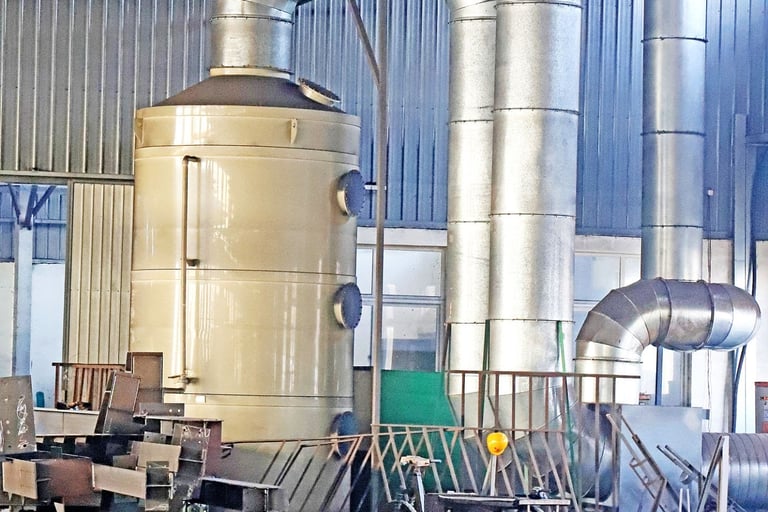
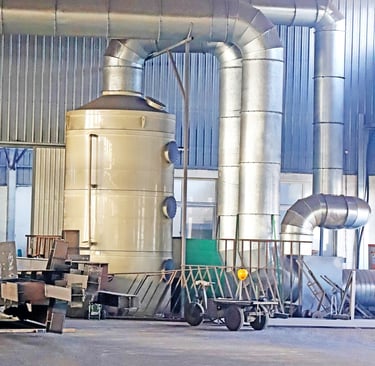
Industrial Gas Absorption Tower Wet Scrubber System
How Structured and Random Packings Drive Efficiency
The core of a wet scrubber’s efficiency is its internal packing zone. The dirty exhaust gas enters the bottom of the tower and moves upward, while a liquid washing solvent is sprayed down from the top.
To maximize the contact area between the gas and the liquid, the tower is filled with specialized shapes known as tower packings (which can be random rings or highly structured corrugated metal grids).
[ Gas Absorption Column Dynamics ] [ Liquid Spray Solvent ] ⬇️ (Flows down across packings) ======================================================== [ Packing Bed Zone ] ➔ Maximizes gas-liquid contact surface area ======================================================== [ Contaminated Gas ] ⬆️ (Rises upward from the bottom)
The packing elements force the descending liquid to break apart into thin films, spreading it uniformly across a massive surface area. As the rising gas passes through the tight spaces between these wet shapes, the chemical pollutants dissolve efficiently into the liquid film.
The Crucial Trade-off: Surface Area vs. Pressure Drop
When specifying tower packing for a wet scrubber, process engineers must balance two conflicting variables:
High Surface Area: Smaller packing shapes provide more surface area per cubic foot, resulting in a cleaner exhaust stream.
Low Pressure Drop: However, smaller shapes restrict air flow, creating a higher resistance (pressure drop) across the column. This forces the plant's main exhaust fan to use significantly more electrical energy to push the air through the system.
Selecting the right packing size and geometry ensures your facility achieves environmental compliance without driving utility costs through the roof.
Clean Air Performance Engineered for Industry Pipemav manufactures high-performance packed tower scrubbers, random packings, and structured tower internals designed for severe industrial air treatment applications.